Financial education to become compulsory in NZ schools
• March 27, 2026
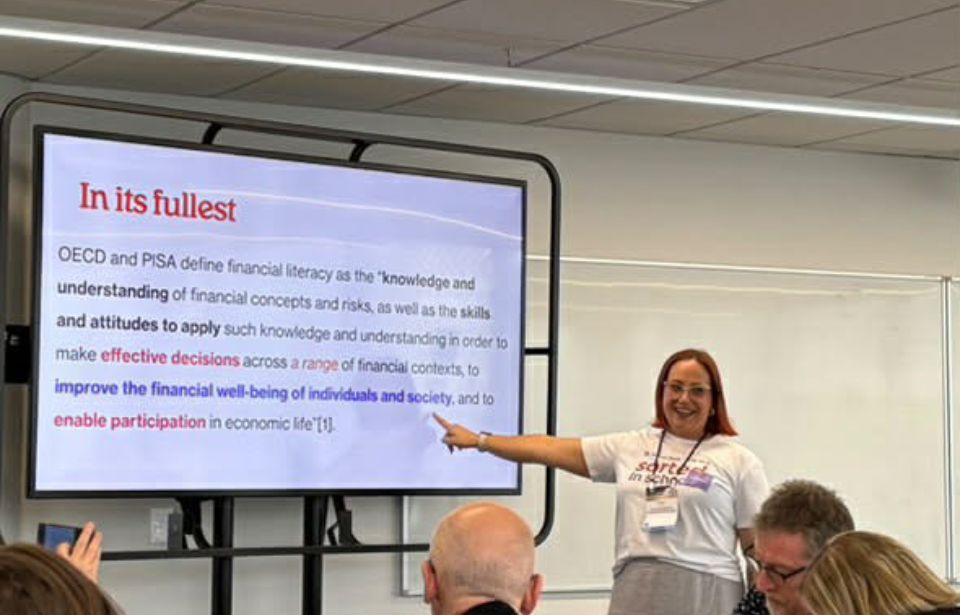
Learning lead at Te Ara Ahunga Ora Retirement Commission Yasmin Frazer speaks on financial education. Photo: Supplied
Financial education will become compulsory in New Zealand schools for students in Years 1 – 10, as part of a nationwide curriculum overhaul.
The new programme will roll out across 2026 and 2027, integrated into the mathematics and social sciences curriculum.
Learning lead at Te Ara Ahunga Ora Retirement Commission’s Sorted in Schools programme, Yasmin Frazer, has spent several years developing and advocating for financial education in schools.
She says the organisation has long campaigned for it to become a core part of the curriculum, working alongside the Ministry of Education.
“In the last election, both major political parties committed to making financial education compulsory.
“At the same time, the schooling system is undergoing a major curriculum overhaul, so the timing has aligned.”
Frazer said financial education has previously been taught inconsistently across schools.
“Only about 20 per cent of young people receive some form of financial education.”
The new programme aims to ensure all young people receive a basic level of financial education.
Frazer says they are working with the Ministry of Education to finalise which specific topics will be covered.
“Young people are going to be learning things like the power of interest – how they grow their money – as well as how to make financial decisions and understand that different people have different values around money.”
She says it’s critical for young people to have a basic understanding of money, and just as important for parents to learn alongside their children.
“Actively engaging young people in our economic life is something we can't avoid. Whether they're hearing it around them or whether we're actively having conversations with them as a parent.”
A survey by Te Ara Ora Retirement Commission found that more than 85 per cent of New Zealand adults do not have enough knowledge to compare the terms and conditions of a credit or insurance product.
The same study found that two-thirds of New Zealanders make poorly informed financial decisions.
Frazer says the new curriculum will also improve equality for tamariki from less advantaged backgrounds.
“Every school in New Zealand, no matter where, will be covering the same knowledge and skills.
“We often assume we need to teach young people about budgeting in an area that suffers a bit more hardship. But why shouldn't those young people learn about growing their money as well?”
Frazer, who has been in the education sector for nearly 20 years, says young people with core fundamentals of financial knowledge and skills will have a huge economic impact on the country.
-----
Our journalists sometimes use AI tools which are checked by humans for accuracy.
AI was used to help with research.
AI was used to transcribe audio from the interview.



Entrepreneurial platform for migrant women hopes to help change negative narratives
Keesha Levesque • June 8, 2026
Entrepreneurial platform for migrant women hopes to help change negative narratives
Keesha Levesque • June 8, 2026