New traffic trial on Queen St clashes with public access initiative, say experts
• May 14, 2026
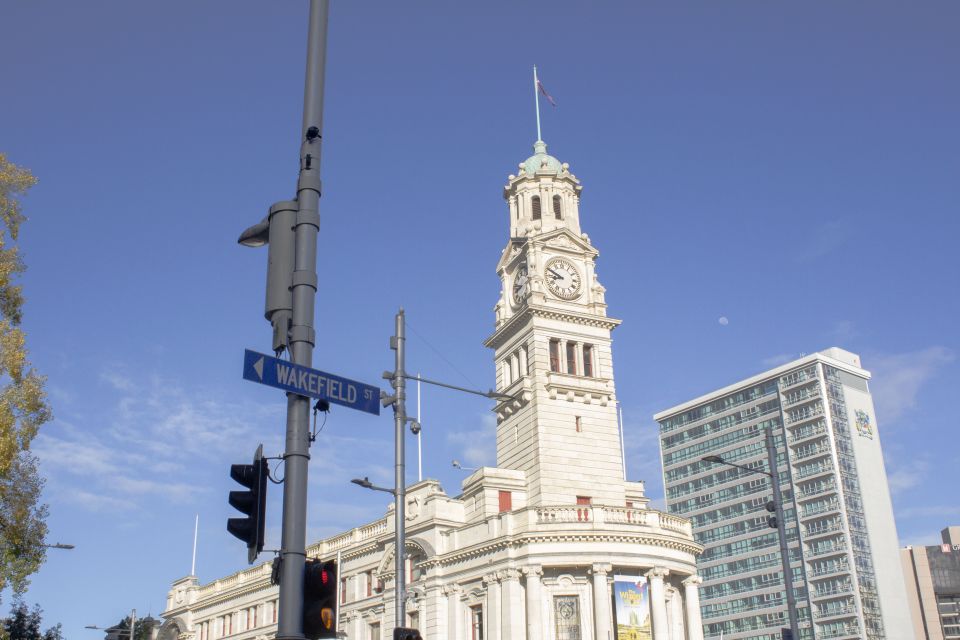
The trial opened night traffic on Queen St between Wellesley and Wakefield streets. Photo: Keesha Levesque
A new trial has reintroduced night traffic to a section of Queen Street, but urban planning experts say they have reservations.
According to a press release from Auckland Transport, the Midtown Access Trial supports the new Wellesley Street Bus Interchange and the anticipated opening of the City Rail Link (CRL).
The trial began April 19 and includes opening a section of Queen Street, between Wellesley and Wakefield streets, to general traffic at night.
Night traffic in this location was previously only open to authorised vehicles, such as buses, bikes and emergency vehicles.
The trial, which also allows for total mobility vehicles to use the Goods Vehicle Lane and bus lane, will run for two years.
Ludo Campbell-Reid, a celebrated urban strategist who was headhunted to drive the original 2012 City Centre Masterplan (CCMP), says he understands the intent behind the trial, but has reservations about reintroducing vehicles on a limited basis.
The move runs counter to the city’s “established direction” towards prioritising pedestrians at the same time as the CRL is set to come online.
“It risks sending a mixed signal,” he says.
Campbell-Reid, who has been dubbed the City Doctor, says he would be more inclined to support trial access initiatives that work in tandem with evening social activity, such as extended trading hours and more outdoor dining.
However, he acknowledges testing ideas through pilots is “part of how cities evolve”.
The revised 2020 CCMP included 10 projected outcomes that support eight transformational moves from 2012, connected to the council’s Access for Everyone (A4E) initiative.
A4E was launched in response to evolving city-centre transport needs, creating a shift away from private vehicles and reducing traffic passing through the city centre.
Under the A4E vision statement, the initiative was designed to achieve zero-emissions areas in the Queen Street valley, reduce general through-traffic and enable pilot projects which prioritised pedestrians.
Simon Oddie, the priority location director at the City Centre Lead Agency, describes the latest trial as a practical step forward in a long-term direction.
“The trial reflects the feedback that we’ve heard from stakeholders about the need to manage the transition from the current state to the future state,” says Oddie.
According to Oddie, there was a wide range of feedback, but much of it focused on enabling everyday operations and increasing accessibility, particularly around theatres and the arts quarter.
“Through this trial, we’ll be able to assess as to how effective that has been and whether or not there are other ways for us to achieve those outcomes,” says Oddie.
Campbell-Reid says the original CCMP was not designed to deliver a fixed list of projects but rather to create a trajectory for Auckland’s future.
“Implementing the masterplan was always intended as a series of chapters over multiple decades.
“Each chapter identified specific projects within a key set of moves, delivered across council and partners,” says Campbell-Reid.
According to a report by Auckland Transport, 78 business owners and more than 50 stakeholder groups provided feedback on the trial.
The most common feedback was generally supportive, but more than 50 pieces of feedback called for a pedestrianised, car-free Queen Street.
An AUT lecturer in spatial design, Jack Wu, says he hopes the trial is genuinely experimental, with clear and publicly stated criteria for what success looks like.
“When [council] departments develop transport planning, housing policy and public space design in parallel without genuine conversation, the people who suffer the most are usually those with the least voice.
“[These are] residents in lower-income areas, people with mobility challenges [and] communities without consultants representing their interests,” says Wu.
Meanwhile, another urban planning expert, Erica Hinckson, is apprehensive about the new trial.
“[It] goes against everything we have been advocating for to date,” says Hinckson.
If the trial was equity-based for people with disabilities, it would make sense to open specific areas for night traffic, but not as an open call for all vehicles, she says.
Hinckson is the co-director of the Global Observatory of Healthy and Sustainable Cities (GOHSC), an initiative that provides evidence-based urban policy indicators to track city progress.
“When it comes to policy, do cities have actual targets that they put forward to meet, and all those [targets] for us are indicators whether they’re serious about making a change in terms of health and sustainability,” says Hinckson.
While the 2020 CCMP has an outcome scorecard, it includes few metrics measuring those outcomes.
For A4E, however, measurable targets include a 30 per cent reduction in peak-time traffic and shifting 11,000 people from vehicles to public transport by 2030.
According to Hinckson, GOHSC released a scorecard with metrics in 2022 and invited members from Auckland Council and Auckland Transport to attend the launch.
Hinckson says it is important which measurements are chosen for the mid-town trial. “If it’s about completing a project, it’s not enough. We need to have specific targets and specific metrics to follow.
“It’s very important to go beyond the aspirational language and actually have targets so it’s transparent what is done,” says Hinckson.
Auckland Transport will provide quarterly opportunities for feedback throughout the Midtown Access Advisory Group.
The first opportunity to share feedback will be this July.
Our journalists sometimes use AI tools which are checked by humans for accuracy.
AI was used to help with research.
AI was used to transcribe audio from the interview.

Entrepreneurial platform for migrant women hopes to help change negative narratives
Keesha Levesque • June 8, 2026
Entrepreneurial platform for migrant women hopes to help change negative narratives
Keesha Levesque • June 8, 2026